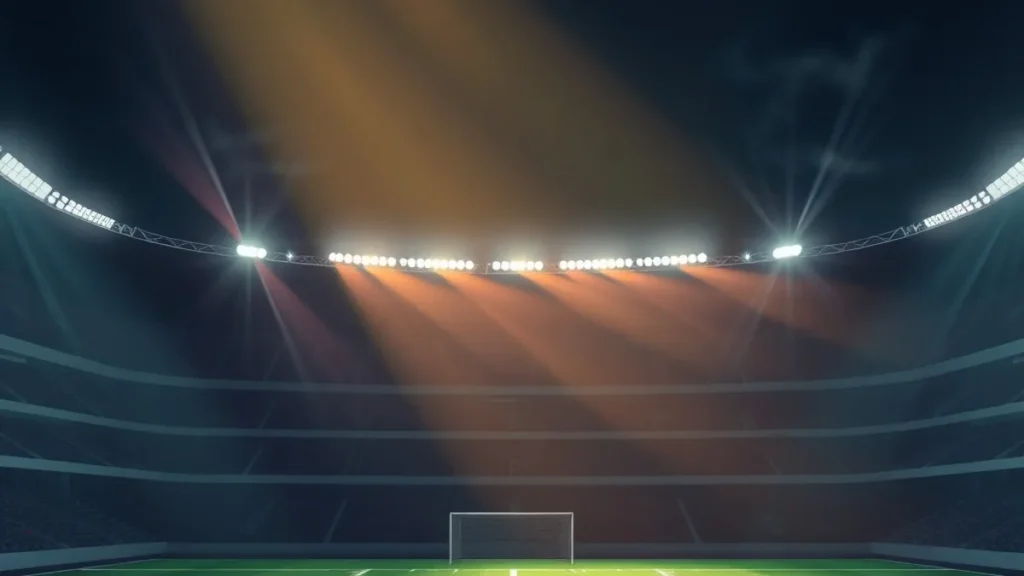
The lights went out during the highly anticipated Monday Night Football matchup between the Cincinnati Bengals and the Washington Commanders on November 23, 2026, leading to a chaotic interruption that almost overshadowed a thrilling finish. The outage, attributed to a failure in the routine maintenance schedule, became a pivotal moment in the game, which the Commanders won 27-24 in dramatic fashion. What began as a standard inter-conference battle with heavy postseason ramifications transformed into an unprecedented test of mental endurance, tactical adaptability, and operational resilience under the bright lights of a national broadcast.
A Shocking Prime-Time Interruption at FedExField
As the game unfolded at FedExField in Landover, Maryland, fans were treated to a back-and-forth battle between two teams vying for playoff positioning. The Commanders, led by quarterback Sam Howell, were looking to solidify their place in the NFC playoff race, while the Bengals aimed to bounce back from previous setbacks. However, just as the game reached its dramatic climax late in the fourth quarter with under two minutes remaining on the clock, the stadium lights unexpectedly went dark, plunging the arena into near-complete darkness and halting a high-stakes drive.
The outage occurred at a critical juncture when tension was at its absolute peak. Fans and players alike were left bewildered as the game was officially paused by officials for approximately 15 minutes. According to NBC Sports, the cause of the blackout was traced back to a failure to adjust the routine maintenance schedule, which had been set prior to the event. The third-party vendor responsible for the stadium’s lighting system reportedly overlooked the significance and revised timeline of the Monday night contest, allowing an automated power preservation protocol to execute prematurely during live national television coverage.
Read more: Mayor Lucas Excuses Residents for KC Current Victory March Celebration
This incident not only disrupted the flow of the game but also raised urgent questions regarding the operational readiness of venues hosting marquee NFL events. The league, long recognized for its meticulous logistics and rigorous production standards, faced immediate scrutiny over how such an avoidable administrative oversight could transpire during a game with severe playoff implications. The lights-out incident served as a stark reminder of the technical vulnerabilities that can persist even within high-profile, professional sporting environments.
Chronological Background of a Tight Inter-Conference Clash
Before the unexpected darkness enveloped FedExField, the contest had developed into an offensive showcase featuring contrasting schematic styles. The Cincinnati Bengals entered the late November matchup striving to stabilize their season and stay alive in a competitive AFC Wild Card race. Armed with quarterback Joe Burrow and a dynamic wide receiver core, Cincinnati built momentum by executing precision passing concepts designed to stretch Washington’s secondary vertically and horizontally.
Washington, operating under head coach Ron Rivera, counteracted with a balanced offensive approach focused on quick-rhythm throws, calculated rollouts, and controlling time of possession. Throughout three and a half quarters, neither team established a multi-score cushion. The lead traded hands repeatedly as both coaching staffs made real-time adjustments to keep pace with each other’s scoring output.
The game reached a critical threshold deep in the fourth quarter. Down by four points, Joe Burrow engineered an impressive drive that culminated in a touchdown pass to wide receiver Ja’Marr Chase, giving Cincinnati a 24-21 lead. With the Bengals’ defense amped up and the Landover crowd silenced, Washington took over possession needing a drive to save the game. It was precisely at this moment—with the game clock ticking under two minutes—that the venue’s master lighting grid shut off, freezing a high-pressure narrative in mid-stride.
Tactical Adjustments and Sideline Leadership During the Darkness
When play resumed following the 15-minute delay, the Commanders found themselves in a precarious position, trailing the Bengals 24-21 with limited time and zero margin for error. An unexpected break in momentum of that magnitude can easily derail an offense’s rhythm, but head coach Ron Rivera utilized the unexpected interlude to calmly regroup his offensive unit on the sideline. Rather than allowing frustration to take hold, Rivera and his coordinator mapped out a sequence of high-probability plays designed to attack specific defensive soft spots.
Sam Howell, who had maintained a solid performance throughout the contest, took full advantage of the pause to mentally process Cincinnati’s defensive coverage shells. The break forced both teams into a rare mid-drive warm-up period, testing the physical readiness of pass-rushers and receivers who had suddenly gone cold. For Washington, the delay acted as an emotional reset button rather than a distraction.
The Commanders’ offense came out firing immediately after the delay, executing a series of precise plays that showcased their tactical versatility. The pause allowed Rivera to select plays specifically tailored to counter Cincinnati’s aggressive late-game blitz alignments. This tactical shift was not merely a product of individual athletic skill, but a clear demonstration of coaching leadership under unscripted pressure. Washington utilized the downtime to refocus, establishing a level of poise that proved decisive during the game’s final snaps.
Sam Howell’s Defining Fourth-Quarter Drive
Sam Howell’s performance in the closing moments following the lights returning was nothing short of spectacular. Facing an aggressive Cincinnati pass rush and an unforgiving clock, the young quarterback demonstrated exceptional pocket awareness and decision-making clarity. Howell systematically picked apart the coverage, distributing the ball with velocity and ball placement that kept the Bengals’ secondary back on its heels.
The defining play of the drive occurred on a high-stakes third down, where Howell stood tall in the face of pressure to deliver a strike to wide receiver Terry McLaurin. McLaurin’s contested catch secured a vital first down, keeping the drive alive and placing Washington within striking distance of the end zone. Moments later, with time rapidly expiring, Howell targeted tight end Logan Thomas in the end zone for the game-winning touchdown pass, securing the 27-24 victory for Washington.
Postgame, Howell addressed how the team maintained its mental edge through the delay, stating, “We knew we had to stay composed. We believed in each other, and we executed when it mattered most.”
Howell’s performance is particularly noteworthy within the context of his professional development. Selected in the fifth round of the 2022 NFL Draft, Howell had frequently faced external skepticism regarding his viability as a long-term franchise starter. However, his composure during the blackout and his clutch execution under high-stress conditions represented a potential turning point in his young career. His ability to elevate his play during crunch time provides Washington with newfound confidence as they push toward the postseason.
Cincinnati’s Late-Game Execution and Defensive Breakdown
While the Commanders celebrated a dramatic comeback victory, the Cincinnati Bengals were left to dissect a heartbreaking loss that slipped through their fingers. Cincinnati’s offense had performed at an elite level for large stretches of the evening, powered by quarterback Joe Burrow. Burrow finished the contest with impressive individual statistics, completing passes for 305 yards and three touchdowns, including the late scoring strike to Ja’Marr Chase that gave the Bengals their short-lived 24-21 advantage.
However, the 15-minute operational stoppage appeared to disrupt Cincinnati’s defensive momentum far more severely than Washington’s offense. Prior to the delay, the Bengals’ pass rush had successfully disrupted Howell’s timing. Upon returning to the field, the defense looked out of sync, failing to generate pressure and giving up critical passing lanes on the final drive.
Addressing reporters after the loss, Burrow expressed deep frustration with the outcome: “We had the game in our hands, but we let it slip away. We need to learn from this and come back stronger.”
The loss highlighted a lingering issue for Cincinnati: an inability to consistently close out games against quality opposition despite holding late leads. Despite boasting one of the most explosive talent bases in the league, operational lapses and late-game defensive breakdowns have repeatedly cost the team valuable positioning. Moving forward, fixing these late-game execution errors will be vital if Cincinnati hopes to maximize its championship window.
Playoff Implications in the NFC and AFC Races
The final score of 27-24 carries substantial weight for both franchises as the regular season enters its final stretch. With the home victory, the Washington Commanders improved their record to 8-3, strengthening their hold on a playoff spot within the NFC. Winning a high-visibility prime-time game under adverse conditions provides Ron Rivera’s squad with immense momentum and validates their standing as legitimate contenders within the conference.
Conversely, the defeat dropped the Cincinnati Bengals to a 6-5 record, placing them in a precarious situation within the competitive AFC wild-card picture. In a conference where playoff tiebreakers are often decided by small margins, dropping a game in which they held a late fourth-quarter lead significantly narrows Cincinnati’s path to the postseason. The Bengals now face a minimal margin for error over their remaining schedule.
As the postseason approaches, momentum and operational consistency become paramount. For Washington, an 8-3 record provides structural leverage in seeding battles. For Cincinnati, falling to 6-5 forces the team into a week-by-week survival mindset where every remaining game carries high stakes.
Institutional Vulnerabilities and Stadium Operational Oversight
Beyond the athletic performance on the field, the power failure at FedExField serves as a case study in operational risk management for major sports entertainment entities. Prime-time broadcasts represent the NFL’s most valuable media assets, requiring precise coordination between network producers, stadium engineers, local utilities, and venue management teams. A routine maintenance error by an outside vendor resulting in a 15-minute darkness delay during Monday Night Football represents a major breach of standard facility protocol.
In the aftermath of the event, league officials and venue administrators face pressure to audit stadium infrastructure procedures nationwide. Questions regarding why secondary backup generators failed to instantly compensate for the primary lighting grid shutdown remain central to postgame inquiries. The incident emphasizes that automated vendor schedules must be strictly aligned with real-time event management systems to prevent operational failures during live events.
Ultimately, the November 23 matchup between the Bengals and Commanders will be remembered for two distinct reasons: the shocking technical failure that briefly halted prime-time television, and the remarkable composure shown by Sam Howell and the Washington offense immediately after the lights came back on. As both clubs turn their focus to the remainder of the season, the lessons learned from this extraordinary night will continue to resonate across the league.
Sources and Reporting
- NBC Sports: Lights went out on Monday night because routine maintenance schedule wasn’t changed
- Yahoo Sports: Mystery solved: Here's why the 'Monday Night Football' lights went out on Bengals-Commanders
- Fox News: Stadium lights go out during Bengals-Commanders game because vendor forgot about Monday Night Football
- The Washington Post: The relatable reason the lights went out during the Commanders-Bengals game
- The Guardian: Lights go out on Commanders before they beat Bengals in final seconds
Editorial note: This article was drafted with the assistance of artificial intelligence from publicly available reporting and passed automated editorial checks. The illustration is AI-generated and does not depict a real event or real people. Spotted an error? Email [email protected] or read our Corrections Policy and Editorial Policy.