
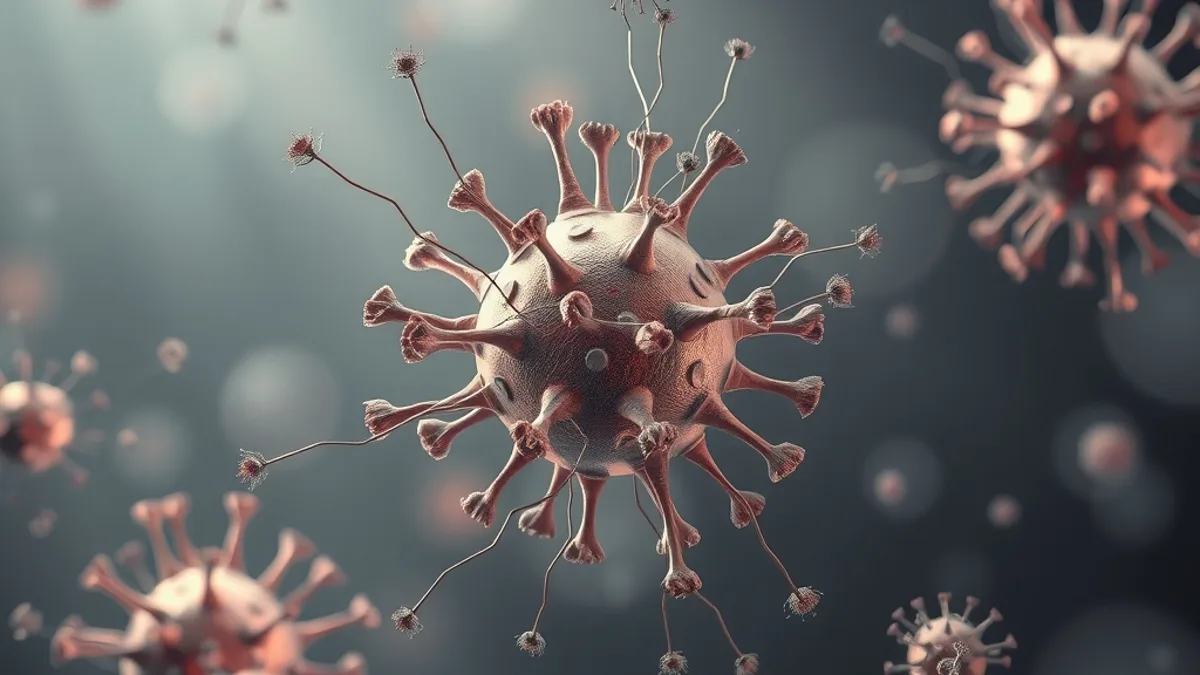
A severe outbreak of H5N1 avian influenza at a Utah mink farm has sparked urgent international public health concerns, with virologists warning that the facility presents a “perfect petri dish” for dangerous viral mutations. Reports indicate the pathogen jumped from infected dairy cattle while federal regulators watched, drawing sharp criticism over federal containment strategies.
Key Takeaways
- An outbreak of highly pathogenic H5N1 avian influenza at a mink farm in Utah has raised global alarms regarding potential viral mutation and human spillover.
- Virologists report that the virus jumped from dairy cattle into the mink population while under the active surveillance of the United States Department of Agriculture (USDA).
- Public health experts cited by foreign media warn that the Trump administration is struggling to maintain control over the expanding multi-species bird flu crisis.
- International health authorities caution that H5N1 may be only a single significant mutation away from gaining the capability for efficient human-to-human transmission.
- Governments worldwide, including in the United Kingdom, are evaluating their emergency pandemic readiness and antiviral stockpiles in response to the U.S. agricultural outbreak.
What Happened
The confirmation of a major avian influenza outbreak at a commercial mink operation in Utah has intensified fears among global health experts about the evolutionary trajectory of the H5N1 virus. According to reporting by Newser, leading virologists have described the crowded conditions inherent to mink farming as a “perfect petri dish” for the virus to adapt to mammalian hosts, escalating the danger of a broader public health crisis.
The transmission pathway behind the Utah outbreak has drawn intense scrutiny from scientists and policy analysts. As reported by BigGo Finance, virologists revealed that the H5N1 strain slipped into the mink herd directly from infected dairy cattle. Crucially, researchers noted that this cross-species jump occurred while the United States Department of Agriculture (USDA)—the cabinet-level federal agency tasked with managing farm animal health—was actively monitoring the spread of the virus across American farm operations. The failure to prevent spillover between dairy herds and mink populations has raised significant questions regarding the stringency of federal biosecurity protocols and active surveillance mechanisms.
The implications of the Utah outbreak extend well beyond agricultural management. In an analysis published by Forbes, medical experts outlined the unique biological threat posed by bird flu outbreaks on mink farms. Unlike many other livestock species, minks possess upper respiratory tracts with cellular receptors that closely resemble those found in humans. When the avian flu virus infects a dense mink population, it gains repeated opportunities to replicate and mutate, dramatically increasing the probability that the virus will acquire genetic traits suited for mammalian—and potentially human—airborne transmission.
The federal response to the expanding outbreak has drawn criticism from public health institutions and international observers. As reported by The Telegraph, health experts have warned that the Trump administration is losing its grip on the bird flu situation as the virus continues to cross species boundaries from wild birds to domestic poultry, dairy cattle, and now captive mammals. Critics argue that federal agencies have been too slow to enforce mandatory testing across livestock sectors, leading to unmonitored viral circulation across state lines.
At the same time, news of the U.S. outbreak has reverberated through international public health channels. According to reporting by The i Paper, European health officials and researchers are closely analyzing the Utah event. Virologists cited in the report warned that the virus could be as little as “one mutation away” from posing a serious, direct risk to global human populations, prompting foreign governments to assess their own national preparedness plans and diagnostic capabilities.
Background and Context
Highly pathogenic avian influenza (HPAI), specifically the H5N1 clade, was historically confined primarily to wild migratory birds and domestic poultry flocks. Over the past several years, however, the virus has demonstrated an unprecedented ability to infect diverse mammalian species. In the United States, the disease reached a troubling milestone when it established widespread reservoirs in commercial dairy herds across multiple states, marking the first time the virus had spread systematically among farm mammals.
In the U.S. regulatory architecture, responsibility for managing zoonotic disease outbreaks—diseases that transfer from animals to humans—is divided among several federal bodies. The USDA oversees livestock health, agricultural disease suppression, and farm biosecurity standards. The Centers for Disease Control and Prevention (CDC), an agency within the Department of Health and Human Services (HHS), monitors human health impacts and disease control. Meanwhile, state departments of agriculture manage local farm quarantines and testing mandates.
Mink farms have long been recognized by global epidemiologists as high-risk environments for viral evolution. During the COVID-19 pandemic, mink facilities in Europe and North America demonstrated a propensity to contract SARS-CoV-2 from humans, mutate the virus within dense populations, and pass mutated strains back to human handlers. Similar concerns exist for influenza viruses. Because minks are susceptible to both avian and human flu strains, they can act as “mixing vessels,” allowing different viral strains to exchange genetic material through reassortment, creating novel pathogens against which humans possess no pre-existing immunity.
Political and regulatory dynamics in Washington, D.C., have further complicated the containment effort. Under the Trump administration, agricultural policies have emphasized minimizing federal mandates on farm owners to preserve economic productivity in rural communities. However, public health scientists argue that voluntary testing guidelines for dairy cattle and fur operations have created dangerous blind spots, allowing the virus to spread undetected between farms and across species lines before containment measures can be instituted.
Who Is Affected and What It Means
The outbreak in Utah directly impacts several distinct groups, ranging from local agricultural communities to global public health infrastructure. At the local level, farmworkers, handlers, and veterinarians working on or near infected Utah mink operations face the most immediate risk of exposure. Although human cases of H5N1 in the United States have historically been mild and limited primarily to direct animal contacts, the risk of a severe human infection escalates whenever the virus acquires mammalian adaptation mutations.
For the U.S. agricultural sector, the continued spread of H5N1 carries substantial financial and operational consequences. American dairy and livestock producers face potential quarantine measures, reduced milk yields, restrictions on animal movements, and falling demand from international trade partners concerned about imported contamination. Disruptions in the agricultural supply chain can lead to millions of dollars (USD) in losses for farmers, while federal indemnification programs face growing strain to compensate owners for culled animal populations.
On a global scale, the Utah outbreak has heightened concerns among international health authorities. As detailed by The i Paper, the potential for H5N1 to achieve human-to-human transmission presents a grave threat to global health security. Foreign governments, including public health agencies in the United Kingdom, are evaluating national contingency plans. These preparations include auditing emergency stocks of personal protective equipment (PPE), assessing the availability of antiviral medications such as oseltamivir (Tamiflu), and evaluating candidate vaccines tailored to modern H5N1 lineages.
What We Know and What Remains Unclear
To evaluate the evolving situation, it is critical to distinguish verified facts from unresolved scientific and regulatory questions.
What Is Confirmed:
- An H5N1 outbreak occurred at a commercial mink facility in Utah, marking a significant expansion of the virus in captive mammals.
- Virologists have confirmed that the virus jumped to the mink population from infected dairy cattle, a pathway that developed while the USDA maintained surveillance over farm animal populations.
- Public health experts have openly criticized the Trump administration’s response, arguing that current policy has failed to contain cross-species viral transmission.
- Minks possess upper respiratory cell receptors that make them an exceptionally efficient biological host for viral mutation and mammalian adaptation.
- International bodies and foreign governments are actively assessing their pandemic preparedness as a direct result of the U.S. agricultural developments.
What Remains Unclear:
- It remains unconfirmed whether any human farmworkers associated with the Utah mink operation have contracted H5N1 or shown symptoms of infection.
- Complete genomic sequencing data detailing the exact mutational profile of the Utah mink viral isolates has not been fully published to confirm whether specific human-adapting mutations (such as mutations in the PB2 protein) have become fixed in the population.
- It is uncertain whether the USDA will mandate mandatory testing and strict quarantine orders for all mink operations across the United States or continue relying primarily on state-level voluntary reporting.
- The precise economic impact, measured in direct financial losses to the Utah agricultural sector and potential trade restrictions imposed by foreign nations, remains to be fully quantified.
What Happens Next
In the coming days and weeks, scientists and regulatory authorities will focus heavily on genomic analysis. Federal laboratories at the USDA and CDC are expected to sequence viral samples harvested from the Utah mink herd to determine whether the strain has developed enhanced affinity for human-type respiratory receptors. The speed and transparency with which these genetic sequences are uploaded to public scientific databases will be closely watched by international researchers.
Policymakers in Washington may face mounting pressure from public health advocates and congressional committees to revise current containment protocols. Observers anticipate potential hearings on federal pandemic preparedness and agricultural oversight, where officials from the USDA and HHS may be asked to justify current surveillance guidelines and address criticisms regarding the administration’s management of the crisis.
Internationally, public health organizations such as the World Health Organization (WHO) and the European Centre for Disease Prevention and Control (ECDC) will continue to monitor U.S. reports. If genetic sequencing reveals that the Utah strain has taken definitive evolutionary steps toward human transmissibility, global health agencies may elevate their risk assessments, triggering pre-planned emergency response protocols, including the manufacturing and distribution of targeted H5N1 candidate vaccines.
Frequently Asked Questions
Why are mink farms considered particularly dangerous during an avian flu outbreak?
Mink farms are considered high-risk environments because minks possess respiratory tract cell receptors that can bind to both avian influenza viruses and human influenza viruses. When the virus infects densely populated mink sheds, it rapidly replicates across thousands of animals. This environment creates ideal conditions for the virus to mutate or exchange genetic material, potentially developing traits that allow it to infect human beings and spread efficiently through airborne transmission.
How did H5N1 spread from dairy cattle to minks in Utah?
According to virologists cited by BigGo Finance, H5N1 spilled over from infected dairy cattle into the Utah mink herd. While the exact physical transmission mechanism at the farm level continues to be investigated, transmission can occur through shared agricultural environments, contaminated equipment, animal feed, or personnel moving between facilities. Virologists expressed particular concern because this inter-species spillover took place while the USDA was actively conducting surveillance on bird flu in domestic livestock.
Is there currently a threat of human-to-human transmission from this outbreak?
As reported by The i Paper, virologists caution that the virus may be only a single key mutation away from posing a serious risk of human-to-human transmission. However, at present, documented cases of H5N1 in humans globally have primarily resulted from direct contact with infected birds or livestock rather than sustained human-to-human spread. Public health agencies are conducting genetic sequencing to monitor whether the Utah outbreak has produced mutations that increase risks to the broader human population.
Notice: This article is presented strictly for informational and educational purposes and does not constitute medical, legal, or financial advice. Readers seeking guidance on personal health, biological safety, or agricultural compliance should consult qualified medical professionals, legal experts, or official public health authorities.
Sources and Reporting
- Newser: Utah Mink Farm's Outbreak Is a Pandemic's 'Perfect Petri Dish'
- Forbes: Bird Flu On Mink Farms — What It Means For Human Health
- The Telegraph: Trump administration loses grip on bird flu, experts warn
- BigGo Finance: Utah Mink Outbreak: Virologists Say H5N1 Slipped From Cattle While USDA Watched
- The i Paper: Bird flu is one mutation from serious risk to humans – how prepared is the UK?
Editorial note: This article was drafted with the assistance of artificial intelligence from publicly available reporting and passed automated editorial checks. The illustration is AI-generated and does not depict a real event or real people. Spotted an error? Email [email protected] or read our Corrections Policy and Editorial Policy.