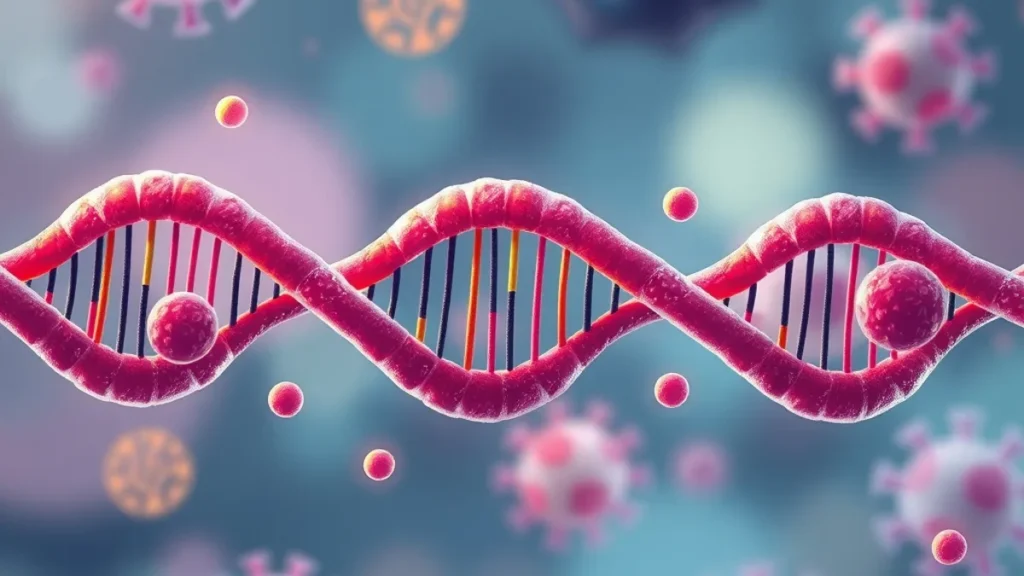
International medical researchers have decoded the master regulatory programs governing glioblastoma plasticity, according to landmark findings published in Nature on Wednesday. By deploying deep learning algorithms and multiomic spatial mapping, scientists uncovered how deadly brain cancer cells dynamically switch identities to evade conventional treatments, offering a prospective molecular compass for precision neuro-oncology.
The Cellular Shapeshifter: Deciphering Glioblastoma Plasticity
Glioblastoma multiforme remains one of the most intractable challenges in modern oncology. Accountable for the majority of primary malignant brain tumors in adults, the disease carries a sobering prognosis: even with aggressive multi-modal therapies combining surgical resection, radiation, and temozolomide chemotherapy, median patient survival hovers around 15 months. For decades, oncologists have struggled to explain why therapies that initially shrink tumors almost universally fail to prevent aggressive, fatal recurrences. The answer, as revealed by breakthrough studies published in Nature, lies in cellular plasticity—the uncanny ability of cancer cells to dynamically morph between distinct biological states to escape therapeutic destruction.
Rather than acting as a static collection of uniform mutated cells, a glioblastoma tumor functions as a highly adaptable ecosystem. Tumor cells continuously shift along a spectrum of phenotypic identities, ranging from neural stem cell-like progenitor states to mesenchymal and astrocyte-like states. As detailed in the newly published research, these transitions are governed by intricate regulatory programs—networks of transcription factors, chromatin remodelers, and microenvironmental signals that dictate cellular behavior. When exposed to targeted drugs or radiation, glioblastoma cells do not simply die; many actively rewire their genetic expression to transition into resistant states, rendering second-line treatments ineffective.
Uncovering these regulatory mechanisms represents a fundamental shift in cancer biology. By transitioning from a static genetic model of cancer—which focuses primarily on DNA mutations—to a dynamic functional model based on state plasticity, researchers have reframed glioblastoma not merely as a mass of rogue cells, but as a complex biological system operating under strict, albeit previously hidden, organizational principles. Understanding these underlying rules offers the scientific community its clearest roadmap yet for preventing tumor adaptation before resistance takes root.
A Deep Learning Atlas for Spatial Microenvironments
The breakthrough in mapping glioblastoma’s cellular landscape relies heavily on artificial intelligence and advanced spatial transcriptomics. As reported by News-Medical, researchers developed a novel deep learning computational method designed to map the spatial architecture of brain cancer cells in high resolution. Traditional single-cell sequencing techniques require dissociating tumor tissue into individual cells, a process that strips away critical contextual information about where those cells resided in the brain and how they interacted with neighboring tissue. The newly deployed deep learning framework bridges this gap by preserving spatial coordinates alongside high-dimensional genomic data.
Complementing this computational architecture, a multiomic human glioblastoma cell atlas was unveiled, as highlighted by Genetic Engineering and Biotechnology News. This atlas integrates multiple layers of biological information—including single-cell RNA transcriptomics, epigenomic modifications, and spatial protein profiling—to construct a comprehensive, multi-layered map of the tumor microenvironment. Scientists can now track how a tumor cell’s precise location within the brain influences its functional identity, revealing that microenvironmental niches, such as hypoxic regions near necrotic tissue or vascular borders near blood vessels, actively drive identity switches.
This multiomic atlas functions as an indispensable navigational compass for cancer researchers. By digitizing the spatial topography of glioblastoma, the tool allows scientists to pinpoint exactly where resistant cell sub-populations reside and how local biochemical signals foster cellular transformation. Rather than treating the tumor as a homogenous mass, clinicians and researchers can now visualize the tumor microenvironment as a complex geographic terrain, identifying specific zones where aggressive cell state transitions originate.
Identifying the Molecular Guardians of Tumor Identity
Crucial to this paradigm shift is the identification of regulatory checkpoints that govern identity transitions within tumor cells. Research highlighted by the German Cancer Research Center (Deutsches Krebsforschungszentrum, or DKFZ) reveals the existence of a “molecular guardian”—a specific regulatory mechanism that actively inhibits or permits an aggressive brain tumor’s ability to switch between identities. This molecular gatekeeper operates within the cell’s epigenetic architecture, keeping tumor cells locked into specific phenotypic profiles or opening the door for rapid adaptation when the cell encounters stress.
When this molecular guardian functions normally within non-cancerous cells, it maintains lineage fidelity, ensuring that a brain cell retains its specialized structure and role. However, in glioblastoma, genetic and epigenetic dysregulation can disable or hijack these guardians. The DKFZ findings demonstrate that manipulating these regulatory proteins can effectively lock cancer cells into a fixed state, preventing them from shifting into the hyper-aggressive, drug-resistant mesenchymal subtype that frequently drives patient relapse.
Key findings from the international consortium highlight several core operational dynamics governing these molecular guardians:
- Transcriptional Reprogramming: Tumor cells utilize specific master transcription factors to rapidly rewrite their gene expression profiles within hours of encountering chemotherapeutic stress.
- Epigenetic Permissiveness: Alterations in chromatin accessibility determine whether a cell can access alternative identity programs, acting as an ON/OFF switch for cellular plasticity.
- Niche-Induced Signaling: Surrounding non-cancerous cells, including microglia and astrocytes, send paracrine signals that suppress or activate these molecular guardians, demonstrating that plasticity is a community-driven process within the brain.
By characterizing these molecular guardians, scientists have identified a novel therapeutic target. Instead of focusing solely on killing cancer cells—a strategy that often spares adaptable stem-like populations—future drug design can focus on stabilizing these regulatory gatekeepers, effectively freezing tumor cells in a vulnerable state where standard treatments can successfully eradicate them.
Mapping Hidden Rules to Overcome Treatment Resistance
The discovery of these regulatory networks finally provides an explanation for one of neuro-oncology’s most persistent mysteries: why promising targeted therapies consistently fail in human clinical trials despite showing high efficacy in preclinical petri dish models. As reported by Cancer Research UK, scientists have uncovered the “hidden rules” governing how glioblastoma populations adapt under evolutionary pressure. In laboratory cultures, cancer cells lack the microenvironmental signals and spatial architecture that trigger identity switching; inside the human brain, however, those hidden rules dictate rapid state conversion.
When a patient undergoes targeted kinase inhibitor therapy or radiation, the treatment kills the susceptible bulk of the tumor. However, the hidden rules of plasticity dictate that a subset of surviving cells will immediately engage stem-like or injury-response pathways, effectively morphing into a completely different cellular state that does not rely on the pathway targeted by the drug. This rapid lineage switching explains the swift, aggressive recurrences observed in clinical practice, where recurrent tumors often exhibit entirely different molecular markers than the primary tumors removed during initial surgery.
Understanding these biological principles allows researchers to predict tumor evolution rather than merely reacting to it. By modeling the mathematical and biological rules that dictate how and when a cell transitions from State A to State B, computational biologists can simulate how a specific tumor will respond to particular therapeutic combinations. This predictive capacity shifts oncology away from trial-and-error treatment regimens toward proactive therapeutic strategies designed to block escape pathways before the tumor can utilize them.
Translating Multiomic Maps into Precision Clinical Therapies
The clinical implications of decoding glioblastoma plasticity are vast, promising to revolutionize how neuro-oncologists design treatment protocols. Armed with spatial multiomic atlases and an understanding of molecular guardians, pharmaceutical developers are already turning their attention toward combination therapies that pair traditional cytotoxic agents with novel plasticity inhibitors. By targeting both the existing tumor mass and the molecular machinery that enables identity switching, researchers hope to permanently eliminate the reservoir of cells responsible for tumor recurrence.
In the United States and across international research centers, clinical trial designs are beginning to reflect this multiomic approach. Emerging protocols aim to utilize real-time spatial profiling of surgical tissue biopsies to map an individual patient’s unique cellular landscape. Rather than prescribing a one-size-fits-all regimen of temozolomide and radiation, oncologists may soon deploy tailored cocktails designed to disable specific transcription factors identified in the patient’s tumor atlas, effectively shutting down the pathways of resistance.
While broad clinical implementation will require extensive validation, regulatory approval, and scalable sequencing technology, the mapping of glioblastoma plasticity marks a definitive turning point in brain cancer research. By exposing the hidden regulatory architecture of the body’s most aggressive brain tumor, international scientists have provided a powerful framework to turn glioblastoma from an inevitably fatal diagnosis into a manageable, treatment-responsive condition.
This article is for informational purposes only and does not constitute medical advice, diagnosis, or treatment recommendations. Individuals seeking guidance on neuro-oncological conditions or brain cancer treatments should consult qualified healthcare professionals.
Sources and Reporting
- Nature: Decoding the regulatory programs governing glioblastoma plasticity
- News-Medical: Deep learning method maps spatial architecture of brain cancer cells
- Cancer Research UK – Cancer News: Scientists uncover the hidden rules behind glioblastoma
- Deutsches Krebsforschungszentrum: Molecular guardian inhibits aggressive brain tumor's ability to switch between identities
- Genetic Engineering and Biotechnology News: Multiomic Human Glioblastoma Cell Atlas Could Act as Compass to Guide Future Treatment Approaches
Editorial note: This article was drafted with the assistance of artificial intelligence from publicly available reporting and passed automated editorial checks. The illustration is AI-generated and does not depict a real event or real people. Spotted an error? Email [email protected] or read our Corrections Policy and Editorial Policy.